
Created at 06 February 2025
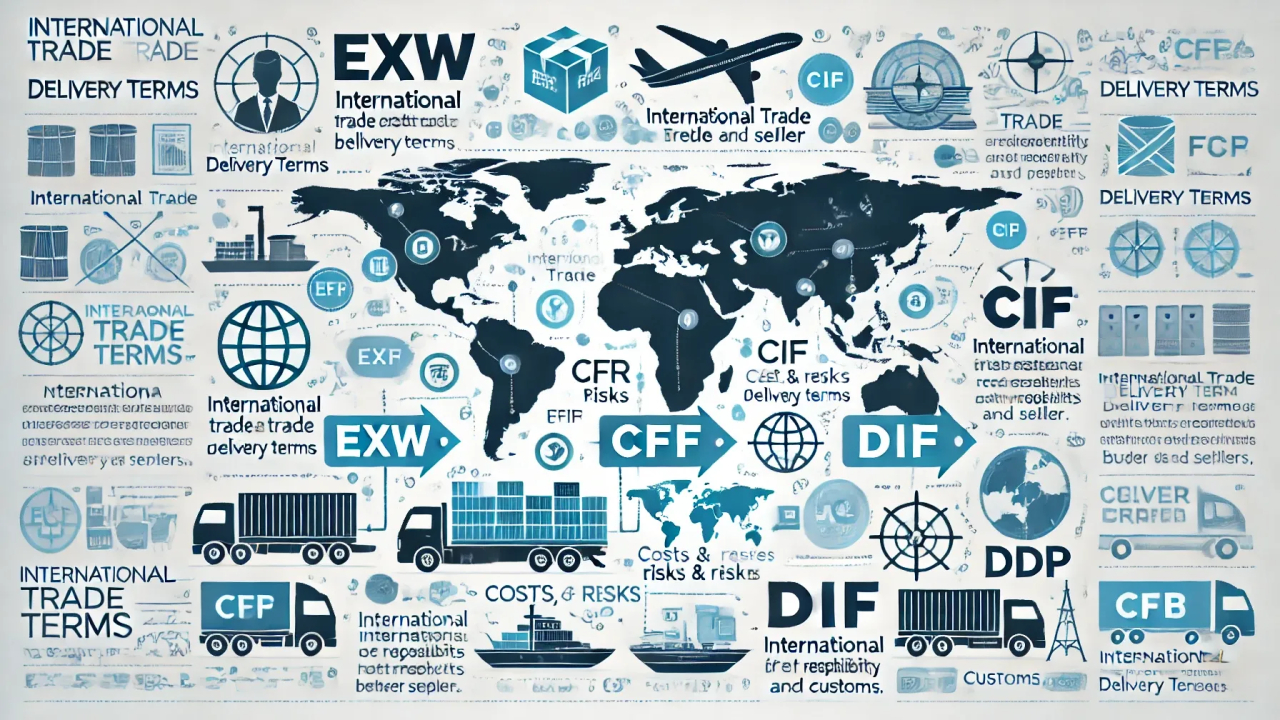
The Role of Delivery Terms in International Trade
Effective logistics operations are crucial for companies to distribute their products to international markets. Understanding delivery terms is essential for managing these operations. These terms outline the sharing of responsibilities and costs between the involved parties. This article explores widely used delivery terms like EXW, FOB, CFR, CIF, and others in international trade.
EXW represents minimal responsibility for the seller. The seller makes the goods available at their premises or a designated location, while the buyer handles all transportation costs and risks. This term is often preferred by sellers seeking to limit their responsibilities.
Advantages:
Simplifies the process for the seller.
Allows the buyer to control the entire logistics chain.
Disadvantages:
Can pose operational challenges for the buyer.
Predicting logistics costs in advance may be difficult.
FOB is frequently used in maritime transport. The seller's responsibility extends until the goods are loaded onto the ship at the designated port. Once loaded, the risk and cost transfer to the buyer.
Advantages:
Clearly defines the division of responsibility between parties.
The seller is responsible up to the loading of goods onto the ship.
Disadvantages:
The buyer bears all risks after loading.
Additional insurance costs may be required.
Under CFR, the seller covers transportation costs to the designated port of destination, but the risk transfers to the buyer once the goods are loaded onto the ship.
Advantages:
Simplifies transportation arrangements for the buyer.
The seller manages the shipping schedule to assist the buyer.
Disadvantages:
The buyer must insure the goods as they bear the risk.
Cost advantages may be lost if the seller fails to optimize freight costs.
CIF is similar to CFR but includes insurance. The seller covers transportation and insurance costs to the destination port, with the risk transferring to the buyer once the goods are loaded onto the ship.
Advantages:
Provides both transportation and insurance arrangements for the buyer.
Suitable for international trade.
Disadvantages:
Insurance coverage may be limited.
The seller might opt for lower-cost insurance packages, posing risks for the buyer.
FCA requires the seller to deliver the goods to a designated location or terminal, assuming all costs and risks until that point. This term applies to road, air, and maritime transport.
Advantages:
Offers flexibility for various modes of transport.
Clearly defines responsibilities between parties.
Disadvantages:
The delivery point must be precisely defined.
Under DAP, the seller delivers the goods to a designated location, covering all transportation costs and risks. However, customs clearance and import duties are the buyer's responsibility.
Advantages:
Reduces the logistics burden for the buyer.
Provides the seller with greater control over delivery.
Disadvantages:
Customs clearance risks transfer to the buyer.
DDP involves the seller delivering the goods to the buyer's designated location, covering all costs and risks, including import duties and customs clearance.
Advantages:
Simplifies the logistics process for the buyer.
Allows the seller full control over the transactions.
Disadvantages:
Imposes a significant financial and operational burden on the seller.
Requires thorough knowledge of laws and procedures in the destination country.
Conclusion
Delivery terms like EXW, FOB, CFR, and CIF streamline international trade operations by clarifying the distribution of responsibilities and costs between parties. Terms such as FCA, DAP, and DDP offer greater flexibility and control. It is vital for companies to understand these delivery terms and select the appropriate one for their transactions. Factors like the product involved, target market, logistics infrastructure, and the parties' experience play crucial roles in determining the suitable delivery term. Companies should specialize in delivery terms and make well-informed decisions.